Psychotherapy and counselling for adults and young people (11+) in Guildford and Horsley, Surrey, with online sessions across the UK.
The Pause That Feels Impossible - Slowing down in a world that won't stop.
Learn why slowing down feels so difficult - and how simple pauses can protect your wellbeing.
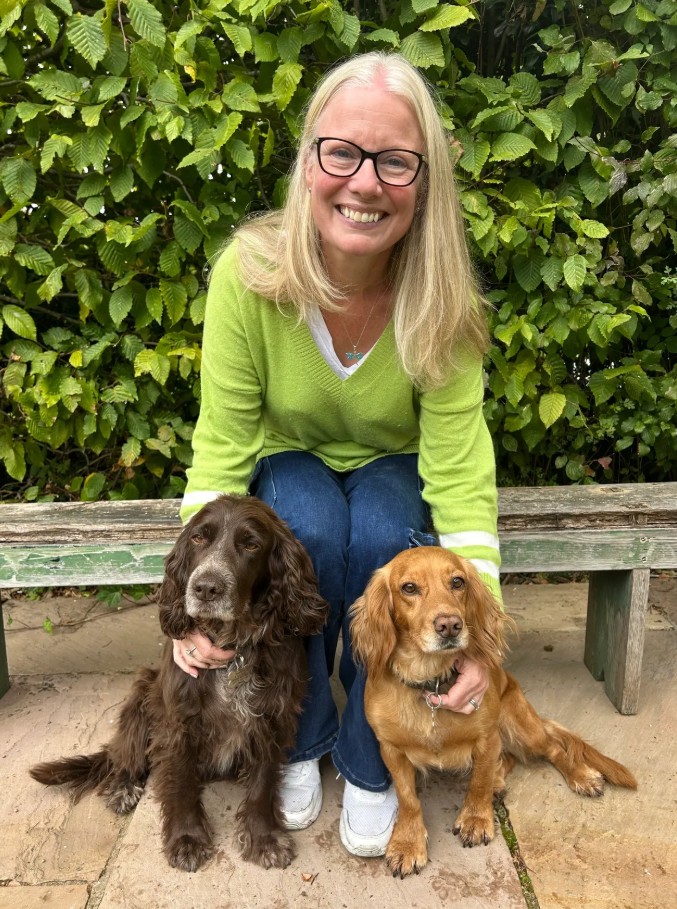
In this photo, I'm with my dogs. They're the ones who make me pause - whether I feel I have time or not. They remind me that presence isn't found by catching up, but by stopping long enough to notice the world around us.
We live in a culture that rewards speed. Quick replies, instant results, next-day delivery. Even self-care becomes another thing to "tick off." And yet, we talk more than ever about burnout and the need to rest. No wonder the pause feels impossible.
Why it's so hard to slow down
For many of us, slowing down can feel unsafe or unproductive. Our nervous systems are used to being "on." We've learned that worth is tied to output — that if we stop, we'll fall behind. The result? Even when we crave rest, we keep moving.
Pausing threatens the identity we've built around being capable, responsive, reliable. But rest doesn't undo those qualities — it sustains them.
The paradox of urgency
Modern life tells us: Do it now or miss out. But constant urgency narrows perspective. It pulls us from reflection to reaction. Therapeutic work often involves noticing that "pause gap" - the moment between impulse and action. In that space, choice returns.
Your version of pause might be tiny - a deep breath before opening an email, stepping outside with a cup of tea, or walking your dog without a podcast. Each pause recalibrates the nervous system and strengthens resilience.
Practical ways to practice pausing
Link it to what already happens. Pause while the kettle boils.
Try a sensory reset. Notice what you can see, hear, smell right now.
Let nature set the pace. Animals and natural settings naturally slow human breathing and heart rate.
Question urgency. Before saying yes, ask: "Does this need my immediate response?"
Over time, these micro-pauses rebuild capacity - you're not falling behind, you're refuelling.
The message my dogs teach me daily
My dogs don't always hurry. They stop to sniff, wander, rest, play. They don't see pausing as wasted time. Being with them reminds me that slowing down doesn't mean doing nothing - it means being here.
If slowing down feels uncomfortable or impossible, you're not alone. Learning to pause is a skill - and it can be learned gently. If you'd like space to explore this, I offer psychotherapy in Guildford and Horsley, and online across the UK.